When you lose a tooth, it doesn’t just affect your smile, it can impact your chewing ability, speech, and even jawbone health. Two of the most common replacement solutions are dental bridges and dental implants. But which is better for your unique situation?
Below, we’ll provide an evidence-based, patient-friendly comparison to help you make an informed decision.
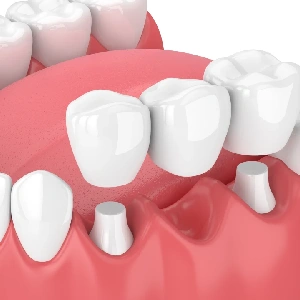
What Are Dental Bridges?
A dental bridge is a fixed dental restoration that replaces one or more missing teeth by literally “bridging” the gap. It consists of three main parts:
- Pontic: the artificial tooth that fills the empty space.
- Abutment crowns: crowns placed on the healthy teeth on either side of the gap, which provide support.
- Bridge framework: the structure that connects everything, ensuring stability and function.
Dental bridges are an excellent choice if you’re missing a single tooth or a few teeth in a row. They restore essential functions such as chewing and speaking, prevent surrounding teeth from shifting out of position, and improve the overall appearance of your smile.
Advantages of Bridges
- Quick treatment: Dental bridges can typically be completed in just two to three visits, making them one of the fastest solutions for tooth replacement.
- Cost-effective upfront: Compared to dental implants, bridges are usually more affordable initially, making them accessible to more patients.
- Aesthetic results: When crafted with high-quality porcelain or ceramic, bridges blend seamlessly with your natural teeth, restoring both function and appearance.
- Improved function: They allow you to chew and speak properly again, preventing the strain that missing teeth can cause.
Limitations of Bridges
- Impact on healthy teeth: To support the bridge, the adjacent natural teeth must be reshaped and crowned, which can compromise their long-term health.
- Shorter lifespan than implants: While durable, most bridges last 10–15 years and may require replacement, especially if oral hygiene isn’t maintained.
- Oral hygiene challenges: Food debris and plaque can collect under the pontic (false tooth), increasing the risk of decay and gum disease without careful cleaning.
- Bone preservation drawback: Unlike implants, bridges do not stimulate the jawbone, which may lead to gradual bone loss over time.
What Are Dental Implants?
A dental implant is a small titanium post that acts as an artificial tooth root. It is surgically placed into the jawbone, where it gradually fuses with the bone through a natural process called osseointegration. This creates a stable and long-lasting foundation for a replacement tooth. Once healing is complete, a custom-made dental crown is securely attached, restoring both function and appearance.
Dental implants are widely recognized as the gold standard for tooth replacement because they look, feel, and function just like natural teeth. Unlike traditional bridges, implants do not rely on neighboring teeth for support, which helps preserve your overall oral health.
Advantages of Implants
- Exceptional longevity: With proper care, dental implants can last 20 years or more, and often remain strong for a lifetime.
- Bone preservation: Implants stimulate the jawbone just like natural tooth roots, preventing the bone loss that commonly follows tooth loss.
- Protect surrounding teeth: Unlike bridges, implants don’t require reshaping or stressing neighboring teeth, helping preserve natural tooth structure.
- Natural look and feel: Implants are designed to look, feel, and function like real teeth, restoring confidence in your smile and comfort in daily activities.
- Improved oral health: Because they integrate with the jawbone, implants provide superior stability, making chewing and speaking effortless.
Limitations of Implants
- Higher upfront cost: Dental implants generally involve a greater initial investment compared to bridges, though their durability often makes them more cost-effective long-term.
- Longer treatment timeline: The implant process includes a healing period of 3–6 months for osseointegration (bone fusion) before the permanent crown is placed.
- Candidacy requirements: Patients with uncontrolled diabetes, significant bone loss, or heavy smoking habits may need additional procedures (such as bone grafting) or lifestyle changes before implants can be placed.
- Surgical procedure: Placement requires minor oral surgery, which involves recovery time, although most patients experience only mild discomfort.
Cost Comparison: Bridges vs. Implants
The cost of tooth replacement depends on factors such as the number of teeth being restored, the materials used, and the complexity of your case. While both options are effective, their pricing structures differ:
- Dental Bridges: Typically range from $2,000 to $5,000 depending on whether you need a traditional bridge or a more complex version like a cantilever or Maryland bridge. Bridges are usually less expensive upfront and can be completed in fewer visits, making them a good short-term solution for many patients.
- Dental Implants: A single implant generally costs $3,000 to $6,000. While this may seem like a larger investment, implants are designed to last decades, often a lifetime, making them more cost-effective over time.
Durability and Longevity
Bridges:
With good oral hygiene and regular dental visits, bridges generally last 10–15 years. However, since they rely on the strength of adjacent teeth for support, their lifespan can be shortened if those teeth develop decay, gum disease, or structural issues. Over time, you may need to replace the bridge to maintain function and aesthetics.
Implants:
Dental implants are built to last. Made of titanium, they fuse directly with your jawbone through a process called osseointegration, creating an exceptionally strong foundation. With proper care, implants can last 25 years or more, and many patients enjoy them for life. This durability is one reason implants are often called the gold standard in tooth replacement.
Comfort and Function
Bridges:
While bridges restore the ability to chew and bite, they may not always feel completely natural because they sit on top of the gums rather than being anchored into the bone. Some patients may also experience mild shifting or discomfort over time, especially if the supporting teeth weaken.
Implants:
Because implants bond directly to the jawbone, they function like natural teeth. They provide superior comfort, stability, and confidence when eating, speaking, or smiling. Patients often forget they even have an implant because it feels so natural. Unlike removable options, there’s no slipping, clicking, or irritation.
Maintenance & Oral Health
Bridges:
Cleaning a dental bridge requires extra attention. Food and plaque can accumulate under the pontic (the artificial tooth), which increases the risk of cavities or gum disease if not properly managed. Patients often need special floss threaders or water flossers to keep the area clean.
Implants:
Implants are easier to care for because they mimic natural teeth. You simply brush and floss as you normally would, and maintain regular dental checkups. Since implants don’t put strain on neighboring teeth, they also help preserve your overall oral health and reduce the risk of further dental problems.
Which One Should You Choose?
Your choice depends on:
- Budget: Bridges are generally more affordable upfront, making them a practical choice for patients seeking quicker results. Implants, while costlier, are a long-term investment due to their durability.
- Timeframe: Bridges can typically be completed in just two to three visits within a few weeks. Implants, however, require several months for healing and integration before the final crown is placed.
- Health factors: Successful implants require healthy gums and sufficient jawbone density. Patients with bone loss, gum disease, or certain medical conditions may need additional treatment before implant placement.
- Long-term goals: Bridges restore function and aesthetics but may eventually require replacement. Implants, on the other hand, support jawbone health, prevent bone loss, and are designed to last for decades.
Conclusion
Deciding between bridges or implants comes down to your health, budget, and long-term goals. Bridges are faster and more affordable upfront, while implants are more durable, natural, and protective of your jawbone health.
At Middle Georgia Center for Cosmetic Dentistry, we combine experience, modern technology, and patient-first care to guide you toward the best solution. Schedule a consultation today and take the first step toward a confident, healthy smile.
FAQs
Which lasts longer, bridges or implants?
Dental implants generally last a lifetime with proper care, while dental bridges typically last 10–15 years before needing replacement.
Is the procedure painful?
Implants involve minor surgery under anesthesia, with patients reporting mild post-procedure soreness, while bridges are quicker, non-surgical, and less invasive.
Can I get implants if I have bone loss?
Yes, dental implants are possible even with bone loss, though a bone graft may be recommended for stability.
Are these procedures safe?
Both implants and bridges are safe when performed by qualified dentists, with implants boasting a documented long-term success rate over 95%.
Does insurance cover implants?
Coverage varies. Bridges are often fully covered, while implant coverage may be partial. Our team helps maximize your insurance benefits.
Bibliography and Sources